Posted: Sun Oct 25, 2009 12:20 pm
Time Magazine
Jellyfish: A Gelatinous Invasion
By Stephan Faris / Rome Monday, Nov. 02, 2009
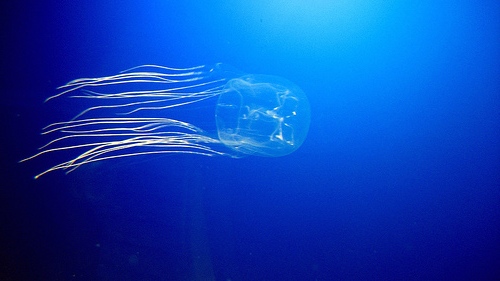
The jellyfish in the photos didn't look like they'd pose a danger to swimmers. Thinly veined and translucent, they didn't have stinging tentacles trailing behind them or dramatic colors signaling danger. But Ferdinando Boero, a professor of zoology at the University of Salento in Italy, knew that they meant trouble nonetheless.
The pictures, sent by a biologist in the northern Italian town of Lerici in July, marked the first time the species Mnemiopsis leidyi, a thumb-size jellyfish known as the sea walnut, had been documented in the western Mediterranean Sea. Native to the Atlantic coast of the U.S., Mnemiopsis was introduced to the Black Sea in the 1980s — most likely from the ballast water of oil tankers — and played an instrumental role in the collapse of the region's fisheries. "Now the question is, Will it do in the Mediterranean the same thing it did in the Black Sea?" Boero says. "It's harmless for [humans], but it can be deadly for the fish."
The ominous discovery — the result of Boero's request that all Italians report their jellyfish sightings — came during a series of unusually prolific jellyfish seasons over the past five years. This summer, jellyfish outbreaks forced numerous resorts along the Mediterranean coast to shut their beaches. In Corsica and Tuscany, several swimmers were wounded by Portuguese man-of-wars, jellyfish-like creatures with a potentially fatal sting. In Tunisia, a swarm of jellyfish engulfed a fish farm, killing the year's production of sea bass and sea bream.
...
Jellyfish: A Gelatinous Invasion
By Stephan Faris / Rome Monday, Nov. 02, 2009
The jellyfish in the photos didn't look like they'd pose a danger to swimmers. Thinly veined and translucent, they didn't have stinging tentacles trailing behind them or dramatic colors signaling danger. But Ferdinando Boero, a professor of zoology at the University of Salento in Italy, knew that they meant trouble nonetheless.
The pictures, sent by a biologist in the northern Italian town of Lerici in July, marked the first time the species Mnemiopsis leidyi, a thumb-size jellyfish known as the sea walnut, had been documented in the western Mediterranean Sea. Native to the Atlantic coast of the U.S., Mnemiopsis was introduced to the Black Sea in the 1980s — most likely from the ballast water of oil tankers — and played an instrumental role in the collapse of the region's fisheries. "Now the question is, Will it do in the Mediterranean the same thing it did in the Black Sea?" Boero says. "It's harmless for [humans], but it can be deadly for the fish."
The ominous discovery — the result of Boero's request that all Italians report their jellyfish sightings — came during a series of unusually prolific jellyfish seasons over the past five years. This summer, jellyfish outbreaks forced numerous resorts along the Mediterranean coast to shut their beaches. In Corsica and Tuscany, several swimmers were wounded by Portuguese man-of-wars, jellyfish-like creatures with a potentially fatal sting. In Tunisia, a swarm of jellyfish engulfed a fish farm, killing the year's production of sea bass and sea bream.
...