What Made "Magick" so Popular in 1984?

Moderators: Elvis, DrVolin, Jeff

Re: What Made "Magick" so Popular in 1984?

Postby barracuda » Sat Dec 25, 2010 9:41 pm

Joe Hillshoist wrote:I blame Neil Megson....


Hey, lookit - it's Joe!

This is the best Christmas ever.
The most dangerous traps are the ones you set for yourself. - Phillip Marlowe
User avatar
barracuda
 
Posts: 12890
Joined: Thu Sep 06, 2007 5:58 pm
Location: Niles, California
Blog: View Blog (0)

Re: What Made "Magick" so Popular in 1984?

Postby Wombaticus Rex » Sat Dec 25, 2010 9:45 pm

Thanks for telling me his real name! ...had to google that shit.

Image

Thanks everyone for your answers, it was good reminder that I was just suffering from tunnel vision and there's a billion different causes. Nothing is ever linear here.
User avatar
Wombaticus Rex
 
Posts: 10896
Joined: Wed Nov 08, 2006 6:33 pm
Location: Vermontistan
Blog: View Blog (0)

Re: What Made "Magick" so Popular in 1984?

Postby Joe Hillshoist » Sat Dec 25, 2010 11:04 pm

Cheers 'cuda.

Its boxing day here, just after lunch (Oh yeah, before you say a word - up yours Morgan), and the sooner this year is over the better...


Hey JR, hows it going?

When I first came to this site I remember one of the many things that struck me was the number of people who were into Genesis P Orridge. I'm a bit surprised no one else picked up on it. Then again its kind of straying into dinosaur territory these days.

...and there's a billion different causes.


Its actually about '84 that I first heard about Crowley, properly, as someone to maybe check out. I was about 14. I dunno about the rest of the world but it was "in the air" or at least on my radar. It was actually the first I heard of a real serious western magical tradition.

I didn't realise it at the time, but people Like GPO, David Tibet and Jaz Coleman, possibbly ex pats like Nick cave and JG Thirlwell, (and add who you like) were the continuation of that tradition in a pretty interesting sort of way. Using music. (Music is a pretty powerful magical tool as you no doubt know.)

They were really hitting their straps by 1984.

So no doubt that lot were doing something effective. Also their music was pretty cutting edge, and I'd imagine that people took note of their influences. If you worked at a reasonably "cool" publisher and were into post punk/no wave music then it might make sense investigate publishing Crowleys stuff at that time - after all it never really went away.

I'm not saying its the only reason tho.

Another one ... in the hills up here round Nimbin people have been doing weird magical stuff forever, but white fellas especially since the mid seventies and with a renewed energy in the 80s. (A least according to some locals.) I'm sure that sort of thing had an influence. (It probably fits with the rise of new age thought too, as there are plenty of new agers round here.) No doubt there were similar groups across the english speaking world (and the non english speaking one,) at the time, and by the 80s they probably had a bit of money to spend (ie potential market for niche publishers.)

I can see all sorts of feedback loops coming into play, between esoteric musical practises, marketing, the rise of mass comms etc etc etc part of it was actually magic, getting the ideas out to like minds. (It feels like it to me cos getting exposed to some of those musos later felt like a sort of reunion, instead of hearing new music.) Part of it was more mundane comms doing the same thing. I mean by generating an interest - interview comments, song lyrics etc etc but getting the ideas out there.

There was all sorts of shit going on in the 80s that fitted with this. The rise of pop metal, D and D, there are probably other things I can't think of right now. Someone mentioned PJ Carroll.

Live Aid. (N0 shit, this was a magical event on many levels and not necessarily a "controlled" one either.)

I dunno, I'm not making a particular argument here, more just noticing a whole lot of trends, and I think what inspired your OP is part of that overall series of trends.

Personally 1/84 - 12/85 was a magical time, literally. In the light of that the first post just kind of fits or makes sense. Of course that (the publishing/meme spike that started back then) happened the way it did. Everything else did so why wouldn't it?


The whole McMartin thing adds another level of weirdness.


But ... I guess that late 70s early 80s english music scene, not necessarily punk, but the other one. It had a real influence both magically and non magically (tho thats a false distinction, but its convenient for the purposes of this discussion.) And it didn't end there. No doubt you've read me rave about the rave movement here over the years.
Joe Hillshoist
 
Posts: 10625
Joined: Mon Jun 12, 2006 10:45 pm
Blog: View Blog (0)

Re: What Made "Magick" so Popular in 1984?

Postby TheDuke » Sun Dec 26, 2010 12:33 am

Joe Hillshoist wrote:Cheers 'cuda.

Its boxing day here, just after lunch (Oh yeah, before you say a word - up yours Morgan), and the sooner this year is over the better...


:lol: :cry:

Ozzy Osbourne had a top fifty hit called Mr Crowley in the early 80's

That is all.
TheDuke
 
Posts: 292
Joined: Tue Aug 26, 2008 5:11 am
Blog: View Blog (0)

Re: What Made "Magick" so Popular in 1984?

Postby KudZu LoTek » Sun Dec 26, 2010 1:12 am

Joe Hillshoist wrote:I didn't realise it at the time, but people Like GPO, David Tibet and Jaz Coleman, possibbly ex pats like Nick cave and JG Thirlwell, (and add who you like) were the continuation of that tradition in a pretty interesting sort of way. Using music. (Music is a pretty powerful magical tool as you no doubt know.)
Jaz Coleman also did an excellent spoken word release called the Courtauld Talks. It focuses on magic(k)'s role in the music of Killing Joke. Good stuff, I wish I had encountered it much earlier.


Joe Hillshoist wrote:There was all sorts of shit going on in the 80s that fitted with this. The rise of pop metal, D and D, there are probably other things I can't think of right now.

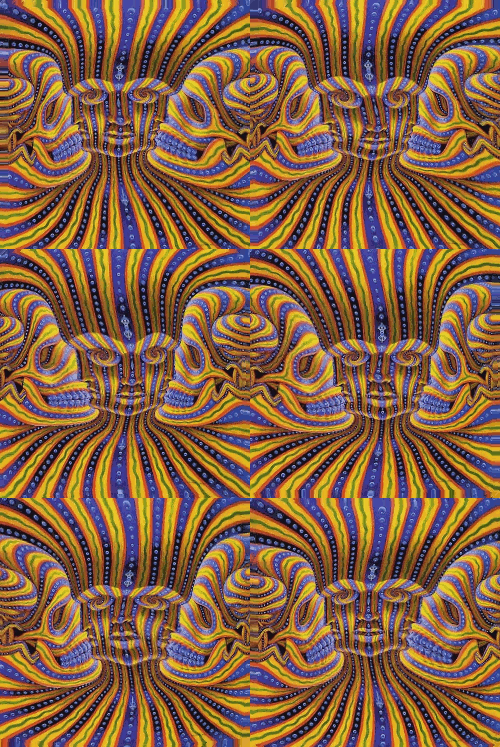
One of my first exposures to non-standard mythology was a 1st edition copy of "Deities and Demigods" (the one with the Lovecraftian/Melnibonean chapters), given to me for some unknown reason by an aunt of mine. I am eternally thankful for being exposed to such subversive material at an early age.

:cthulhu:
"We were meant to get off at Pandemonium. The train was not supposed to stop here. This town is not supposed to be here." - Ian McDonald, Desolation Road
User avatar
KudZu LoTek
 
Posts: 51
Joined: Sun Dec 05, 2010 11:10 pm
Location: Tanelorn
Blog: View Blog (0)

Re: What Made "Magick" so Popular in 1984?

Postby MinM » Sun Jun 30, 2013 10:11 pm

Image @disinfo: #Fotamecus: The Chaos Magick #Film You May Never Get to See http://goo.gl/fb/zFBnJ #stories #chaosmagic #servitors

Fotamecus: The Chaos Magick Film You May Never Get to See
By Frater Isla on June 30, 2013 in stories

In 2001, Matt Lee, director and epic beard-owner, announced the Fotamecus Film Majik Project, a plan to make a “film about time and modern magick, a story about shifting perceptions of time.” The film would follow six chaos magicians as they cast a spell through the use of a sigil to “construct a tool with which our subjective perception of time can be altered.”

The film’s title, Fotamecus, comes from the name of a servitor created in 1996 by a magician calling himself Fenwick Rysen. In chaos magic, a servitor is an artificially created being with limited autonomy that executes a pre-programmed task. In the case of Fotamecus, the the task was to literally condense or expand time, dependent on the needs of the operator. Say, for instance, I was running late to an appointment. In theory, I could call upon the entity to contract the amount of time it would take to get there, and the trip would shorten. The problem, according to Fenwick, is that to contract time in one place meant that time had to be expanded in another. To this end, the servitor was then programmed to self-replicate clones of itself as needed, creating a matrix of servitor nodes. That way, if I needed to make my trip shorter, then a node would be created which another person could access if they wished to make another time period last longer (insert minute man joke here). This would keep me from having to “pay” for my time. With me so far?

Jump ahead five years to Matt Lee and friends, plotting out a film that would manifest the entity onto a projector screen, reaching a larger audience and teaching them how to contact it, effectively taking control of their own perception of time. Matt began soliciting crowd-sourced funding in return for what he called The God Maker Program, a CD/DVD/VHS package including background information on the film, images, audio files, and writings pertaining to DIY servitor creation.

Interest surged. Julian Vayne mentioned the film in his book, Now That’s What I Call Chaos Magick. Discussions and comments popped up all over the internet expressing excitement for the project. Filming began. A release date was projected for 2003, but was pushed back later to 2006. Then, to the frowns of the internet occult community, it was canceled altogether.

Due to the economic downturn, the film’s production company, Indifference Productions, had closed its doors, leaving Matt with hours of 16 mm film that would never be seen. The only publicly available footage resulting from from the work would be a trailer and a forty-one minute documentary entitled Chronomancy.

The first portion of Chronomancy features the magicians making a batch of cookies with the Fotamecus sigil imprinted on them while discussing their own experiences with the servitor as well as some explanations of the sigilization process. The second portion documents a ritual in the woods being performed to invoke Fotamecus into the film while a narrator explains what is happening. Throughout the footage, we hear the entity’s name being repeated as a mantra. As we watch, we are forced into the role of participant, with the mantra being burned into our memory on a level matched only by “Call Me Maybe.” By witnessing the ritual, we are perhaps invoking Fotamecus ourselves...


http://disinfo.com/2013/06/fotamecus-th ... rmation%29

Earth-704509
User avatar
MinM
 
Posts: 3288
Joined: Wed Jun 04, 2008 2:16 pm
Location: Mont Saint-Michel
Blog: View Blog (0)

Re: What Made "Magick" so Popular in 1984?

Postby brekin » Sun Jun 30, 2013 11:05 pm

Hall & Oates helped. More Hall than Oates.
Back in the 80's the occult had a more of a easy listening smoother operator type thing going.


Both the lyrics and musical sounds of Sacred Songs reflected Hall's personal philosophy. The lyrical content alludes to some of Hall's interests in esoteric magic (or "magick" as it is sometimes spelled). Rock music author Timothy White interviewed Hall for the book Rock Lives. In that interview Hall indicated that in 1974 he began a serious study of esoteric spirituality, reading books on topics like the cabala, the ancient Celts, and the traditions of the Druids. He also became interested in the life and beliefs of Aleister Crowley. Crowley coined the concept of Thelema, magick concerned with harnessing the power of the imagination and willpower to effect changes in consciousness and in the material universe. For example the album track "Without Tears" is based on Crowley's book Magick Without Tears (published in 1973).

http://en.wikipedia.org/wiki/Sacred_Songs

Image
If I knew all mysteries and all knowledge, and have not charity, I am nothing. St. Paul
I hang onto my prejudices, they are the testicles of my mind. Eric Hoffer
User avatar
brekin
 
Posts: 3229
Joined: Tue Oct 09, 2007 5:21 pm
Blog: View Blog (1)

Re: What Made "Magick" so Popular in 1984?

Postby 8bitagent » Mon Jul 01, 2013 1:27 am

if one is to believe any of this stuff, than there is no single blacker working in recent modern time than this
Image
"Do you know who I am? I am the arm, and I sound like this..."-man from another place, twin peaks fire walk with me
User avatar
8bitagent
 
Posts: 12250
Joined: Fri Aug 24, 2007 6:49 am
Blog: View Blog (0)

Re: What Made "Magick" so Popular in 1984?

Postby Wombaticus Rex » Mon Jul 01, 2013 9:27 am

Retrocausality, eh? Always an interesting and welcome cocktail ingredient.

MimM, that "fotamecus" material was quite a find, thank you.
User avatar
Wombaticus Rex
 
Posts: 10896
Joined: Wed Nov 08, 2006 6:33 pm
Location: Vermontistan
Blog: View Blog (0)

Re: What Made "Magick" so Popular in 1984?

Postby Jerky » Mon Jul 01, 2013 6:48 pm

The rise of RE:Search and Feral House in popular culture (Apocalypse Culture books 1 and 2, among a host of others that really hit the (underground level) Big Time in mid-to-late 80s.

I can see it.
User avatar
Jerky
 
Posts: 2240
Joined: Fri Apr 22, 2005 6:28 pm
Location: Toronto, ON
Blog: View Blog (0)

Re: What Made "Magick" so Popular in 1984?

Postby brekin » Mon Jul 01, 2013 9:05 pm

There was also the 80's Dungeons and Dragons role playing hysteria linking it to satanism, the occult, suicide, etc

Image
Mazes and Monsters is a 1981 novel by Rona Jaffe. The novel is a cautionary tale regarding the then-new hobby of fantasy role-playing games. The book was adapted into a made-for-television movie by the same name in 1982 starring young Tom Hanks. The novel is based in large part on the largely apocryphal "steam tunnel incidents" of the late 1970s. These urban myths developed during the infancy of role playing games, generally purporting that university students playing a live action version of Dungeons & Dragons or similar game disappeared into the utility tunnels of the school and became lost, and in some cases died of hypothermia or other causes. The legends had risen due to newspaper reports concerning the disappearance of a Michigan State University student named James Dallas Egbert III. Egbert had played Dungeons & Dragons and did in fact go into the steam tunnels of his school, but with the intent of committing suicide. When his attempt on his life failed, he hid at various friends' houses for several weeks. During this time the private investigator hired by Egbert's parents to find him speculated in the press that perhaps Egbert had gone into the steam tunnels to play a live version of the game and gotten lost. The media reported the theory as fact and caused controversy over the effects of playing the game.

http://en.wikipedia.org/wiki/Mazes_and_ ... 28novel%29

And there were a few heavy metal/Satan flavored murders around that time.

Image

Richard "Ricky" Kasso (March 1967 - July 7, 1984), also known as The Acid King, murdered 17-year-old acquaintance Gary Lauwers in Northport, Long Island, New York on June 16, 1984. Two other teens, Jimmy Troiano and Albert Quinones, were present at the murder, which took place in the Aztakea Woods of Northport while all four were high on what they believed (and was reported) to be mescaline but was most likely either PCP or LSD. The murder became sensational news in the New York area and across the nation due to the torture of Lauwers and alleged Satanic ritualistic aspects of the murder. The murder took place during a period when there was much public concern[1][2][3] over the effects of Satanic and occult content in heavy metal music and in role playing games. Kasso was wearing an AC/DC t-shirt at the time of his arrest and was a fan of groups such as Black Sabbath, Judas Priest, and Ozzy Osbourne.


Magick might have been what trickled up to those who were more research inclined.
If I knew all mysteries and all knowledge, and have not charity, I am nothing. St. Paul
I hang onto my prejudices, they are the testicles of my mind. Eric Hoffer
User avatar
brekin
 
Posts: 3229
Joined: Tue Oct 09, 2007 5:21 pm
Blog: View Blog (1)

Re: What Made "Magick" so Popular in 1984?

Postby 82_28 » Mon Jul 01, 2013 9:51 pm

This is fascinating. I totally missed this thread. Thanks for the resurrection.

It makes me wonder whether or not the RPG aspect of "modern life" for 1984 presaged the great flux of the readily available computation power to come some years later. Our brains back then were our computers. Our imagination the OS. The content (apps) were in the dice and the source books AND the music being listened to in those days. We call all of this ancient these days, but it was where it was at. The mix tape. The borrowed books. The gathering of kids who made a night of it playing DnD. Yet what if this presaged the upcoming increases in how computers now interact with us?

Image

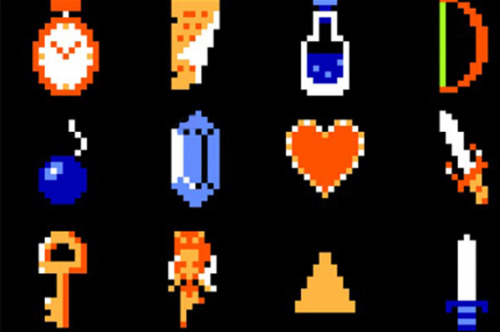
Now each and every thing we do to contact one another or information is dependent upon an icon. It's as though we are casting spells, satanic spells, with every decision we make as it is dependent upon an icon to do anything. I do not mean "satanic" satanic, but this was the way it was back then. I had friends who couldn't play Legend of Zelda because their parents deemed it occult. What was once a great fear of taking over the mind and soul of humans now is a quaint 8bit memory. (Hi, 8bit!)

People saw satan everywhere back then. I remember it. Not that well. But I remember it.

This is a fine line of thought and I look forward to some more content to this old thread.
There is no me. There is no you. There is all. There is no you. There is no me. And that is all. A profound acceptance of an enormous pageantry. A haunting certainty that the unifying principle of this universe is love. -- Propagandhi
User avatar
82_28
 
Posts: 11194
Joined: Fri Nov 30, 2007 4:34 am
Location: North of Queen Anne
Blog: View Blog (0)

Re: What Made "Magick" so Popular in 1984?

Postby brekin » Mon Jul 01, 2013 10:02 pm

82_82 wrote:

People saw satan everywhere back then. I remember it. Not that well. But I remember it.


Yup. And when I read your words above the commercial for Time LIfe's series "Mysteries of the Unknown" starting playing for some reason.


Image
If I knew all mysteries and all knowledge, and have not charity, I am nothing. St. Paul
I hang onto my prejudices, they are the testicles of my mind. Eric Hoffer
User avatar
brekin
 
Posts: 3229
Joined: Tue Oct 09, 2007 5:21 pm
Blog: View Blog (1)

Previous

Return to General Discussion

Who is online

Users browsing this forum: No registered users and 8 guests