The Tribal Olympians

Moderators: Elvis, DrVolin, Jeff

The Tribal Olympians

Postby Saurian Tail » Fri Jul 27, 2012 10:45 pm

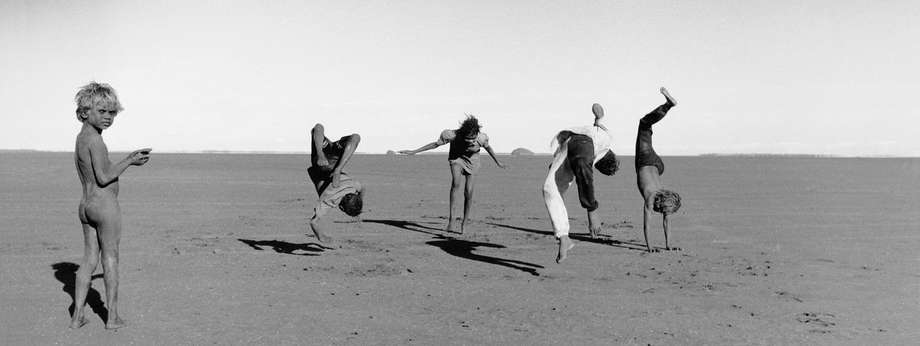
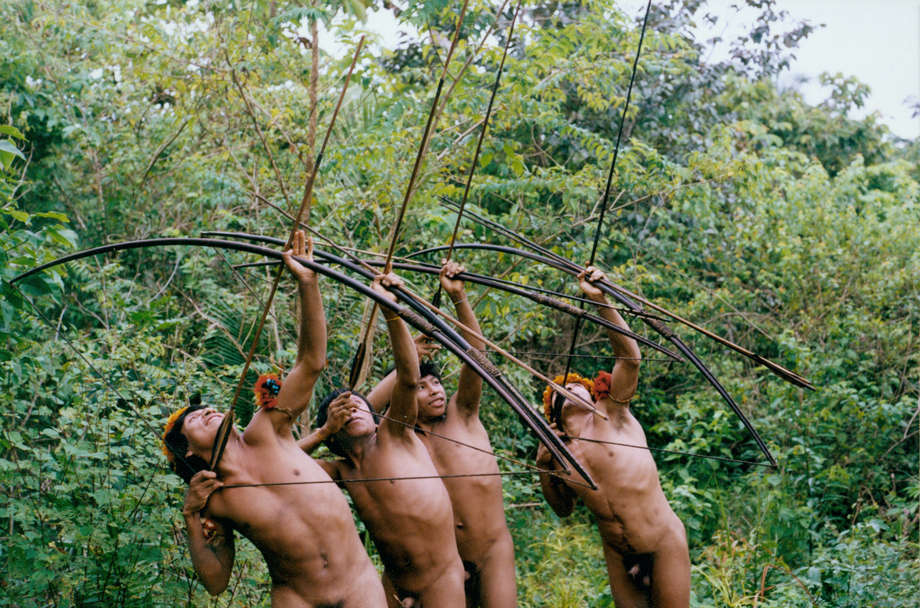
Survival International has done a nice image gallery of the athletic joy of traditional peoples. More fantastic images at the link.

Tribal Olympians

http://www.survivalinternational.org/ga ... /olympians

The London Olympics will test the athletic limits of the world’s most talented sportsmen and women.

To celebrate the 2012 games, Survival reveals some of the astonishing skills of the world’s tribal peoples, from the Awá archers of the Amazon to the Bajau divers of Borneo and the Tarahumara long-distance runners of northwestern Mexico.

Image

Image

Image
"Taking it in its deepest sense, the shadow is the invisible saurian tail that man still drags behind him." -Carl Jung
User avatar
Saurian Tail
 
Posts: 394
Joined: Wed Jan 26, 2011 12:30 pm
Blog: View Blog (0)

Re: The Tribal Olympians

Postby hanshan » Sat Jul 28, 2012 8:43 am

...


Wow

tx


...
hanshan
 
Posts: 1673
Joined: Fri Apr 22, 2005 5:04 pm
Blog: View Blog (0)

Re: The Tribal Olympians

Postby MacCruiskeen » Sat Jul 28, 2012 9:02 am

Fantastic. Thanks, Saurian Tail.

I was struck by this:

The semi-nomadic Moken, who live in the Mergui Archipelago in the Andaman Sea, are said to be able to swim before they can walk.

A recent scientific study conducted by Sweden’s Lund University showed that the eyesight of Moken children is 50% more powerful than that of European children.

Over hundreds of years they have developed the unique ability to focus under water, using their visual skills to dive for food on the sea floor, thus stretching the efficacy of their eyes to the limits of what is humanly possible.

http://www.survivalinternational.org/ga ... lympians#4


I had just made a note of this book, recommended by Ran Prieur. It's searchable at the Amazon link, below:

The Perception of the Environment: Essays on Livelihood, Dwelling and Skill

by Tim Ingold

In this work Tim Ingold offers a persuasive approach to understanding how human beings perceive their surroundings. He argues that what we are used to calling cultural variation consists, in the first place, of variations in skill. Neither innate nor acquired, skills are grown, incorporated into the human organism through practice and training in an environment. They are thus as much biological as cultural. The twenty-three essays comprising this book focus in turn on the procurement of livelihood, on what it means to 'dwell', and on the nature of skill, weaving together approaches from social anthropology, ecological psychology, developmental biology and phenomenology in a way that has never been attempted before. The book is set to revolutionise the way we think about what is 'biological' and 'cultural' in humans, about evolution and history, and indeed about what it means for human beings - at once organisms and persons - to inhabit an environment.

[...]

Tim Ingold is Professor of Social Anthropology at the University of Aberdeen, UK.

http://www.amazon.co.uk/Perception-Envi ... 041522831X
"Ich kann gar nicht so viel fressen, wie ich kotzen möchte." - Max Liebermann,, Berlin, 1933

"Science is the belief in the ignorance of experts." - Richard Feynman, NYC, 1966

TESTDEMIC ➝ "CASE"DEMIC
User avatar
MacCruiskeen
 
Posts: 10558
Joined: Thu Nov 16, 2006 6:47 pm
Blog: View Blog (0)

Re: The Tribal Olympians

Postby hanshan » Sun Jul 29, 2012 8:15 am

...

tx, Mac -will check it out

may be OT - was reminded of this:

Image

http://en.wikipedia.org/wiki/Hamlet's_Mill

The essential premise of the book is that much mythology and ancient literature have been
badly misinterpreted and that they generally relate to a sort of monomyth
conveying significant scientific and specifically astronomical ideas and knowledge.


will dig through files & find some curious items


....
hanshan
 
Posts: 1673
Joined: Fri Apr 22, 2005 5:04 pm
Blog: View Blog (0)

Re: The Tribal Olympians

Postby hanshan » Mon Jul 30, 2012 10:04 am

...


bump


...
hanshan
 
Posts: 1673
Joined: Fri Apr 22, 2005 5:04 pm
Blog: View Blog (0)

Re: The Tribal Olympians

Postby 8bitagent » Mon Jul 30, 2012 1:41 pm

Like child/young women/forced labor human trafficking, another rarely spotlighted evil of "the globalists/PTB/looseknit conglomeration of corporate-government insanity"
is the forced cultural assimilation and the eco destruction that threatens the existence of ancient peoples. How fantastic would it be for these remote folks to still have their way of
life maintained? I dont wanna see these people with cellphones, used batman promo shirts and nike shoes. I wanna see naked tribesman doing their thing, and people honing their craft the way they have for a zillion years(save for a necessary modern medicine intervention) I just like the idea of people that are self sustaining and that have (to many of us) superhuman ability.
We see dumb movies like Avatar, but the real deal indeed seems to be out there.
"Do you know who I am? I am the arm, and I sound like this..."-man from another place, twin peaks fire walk with me
User avatar
8bitagent
 
Posts: 12249
Joined: Fri Aug 24, 2007 6:49 am
Blog: View Blog (0)

Re: The Tribal Olympians

Postby Saurian Tail » Mon Jul 30, 2012 5:23 pm

More athletic joy ...

Village of joy
By Ueslei Marcelino MAY 15, 2012

Deep in the Brazilian heartland, where the upper reaches of the Amazon Basin dissolve into the central plateau, I had the opportunity last week to spend a few days in the village of joy.

What I dubbed the village of joy is the home of the Yawalapiti tribe. One day last week, a group of us were escorted into the Xingu National Park by members of the Darcy Ribeiro Foundation and the Cavaleiro de Jorge cultural center, and arrived at the circular Yawalapiti village under an enormous full moon.

continued ...

http://blogs.reuters.com/photographers- ... ge-of-joy/

Image

Image

Image

Image

"Taking it in its deepest sense, the shadow is the invisible saurian tail that man still drags behind him." -Carl Jung
User avatar
Saurian Tail
 
Posts: 394
Joined: Wed Jan 26, 2011 12:30 pm
Blog: View Blog (0)

Re: The Tribal Olympians

Postby Saurian Tail » Mon Jul 30, 2012 5:47 pm

MacCruiskeen wrote:I had just made a note of this book, recommended by Ran Prieur. It's searchable at the Amazon link, below:

The Perception of the Environment: Essays on Livelihood, Dwelling and Skill

by Tim Ingold

In this work Tim Ingold offers a persuasive approach to understanding how human beings perceive their surroundings. He argues that what we are used to calling cultural variation consists, in the first place, of variations in skill. Neither innate nor acquired, skills are grown, incorporated into the human organism through practice and training in an environment. They are thus as much biological as cultural. The twenty-three essays comprising this book focus in turn on the procurement of livelihood, on what it means to 'dwell', and on the nature of skill, weaving together approaches from social anthropology, ecological psychology, developmental biology and phenomenology in a way that has never been attempted before. The book is set to revolutionise the way we think about what is 'biological' and 'cultural' in humans, about evolution and history, and indeed about what it means for human beings - at once organisms and persons - to inhabit an environment.

[...]

Tim Ingold is Professor of Social Anthropology at the University of Aberdeen, UK.

http://www.amazon.co.uk/Perception-Envi ... 041522831X

This looks great. I found a pdf of this book here:

http://taskscape.files.wordpress.com/20 ... onment.pdf

Browsing through the book I found this paragraph (the last sentence practically brings me to tears):

Drawing an explicit parallel between her own Nayaka material and the ethnography of the Batek and Mbuti, Bird-David argues that hunter gatherer perceptions of the environment are typically oriented by the primary metaphor ‘forest is as parent’, or more generally by the notion that the environment gives the wherewithal of life to people – not in return for appropriate conduct, but unconditionally. Among neighbouring populations of cultivators, by contrast, the environment is likened to an ancestor rather than a parent, which yields its bounty only reciprocally, in return for favours rendered. It is this difference in orientation to the environment, she suggests, that most fundamentally distinguishes hunter-gatherers from cultivators, and it is upheld even when the former draw (as they often do) on cultivated resources and when the latter, conversely, draw on the ‘wild’ resources of the forest (Bird-David 1990). In a subsequent extension of the argument, and drawing once again on Mbuti, Batek and Nayaka ethnography, Bird-David (1992a) proposes that hunter-gatherers liken the unconditional way in which the forest transacts with people to the similarly unconditional transactions that take place among the people of a community, which in anthropological accounts come under the rubric of sharing. Thus the environment shares its bounty with humans just as humans share with one another, thereby integrating both human and non-human components of the world into one, all-embracing ‘cosmic economy of sharing’.

I think this is the root-source of the joy of traditional peoples ... the forest as parent ... unconditionally loving the tribe.

Swimming laps in a chlorinated pool or running laps on an artificial rubberized track just don't connect with one's true spirit.
"Taking it in its deepest sense, the shadow is the invisible saurian tail that man still drags behind him." -Carl Jung
User avatar
Saurian Tail
 
Posts: 394
Joined: Wed Jan 26, 2011 12:30 pm
Blog: View Blog (0)

Re: The Tribal Olympians

Postby Hammer of Los » Mon Jul 30, 2012 7:58 pm

...

The power of unconditional love is great indeed.

...
Hammer of Los
 
Posts: 3309
Joined: Sat Dec 23, 2006 4:48 pm
Blog: View Blog (0)

Re: The Tribal Olympians

Postby hanshan » Mon Jul 30, 2012 9:52 pm

...

^^^^

Saurian Tail:


Quote:
Drawing an explicit parallel between her own Nayaka material and the ethnography of the Batek and Mbuti, Bird-David argues that hunter gatherer perceptions of the environment are typically oriented by the primary metaphor ‘forest is as parent’, or more generally by the notion that the environment gives the wherewithal of life to people – not in return for appropriate conduct, but unconditionally. Among neighbouring populations of cultivators, by contrast, the environment is likened to an ancestor rather than a parent, which yields its bounty only reciprocally, in return for favours rendered. It is this difference in orientation to the environment, she suggests, that most fundamentally distinguishes hunter-gatherers from cultivators, and it is upheld even when the former draw (as they often do) on cultivated resources and when the latter, conversely, draw on the ‘wild’ resources of the forest (Bird-David 1990). In a subsequent extension of the argument, and drawing once again on Mbuti, Batek and Nayaka ethnography, Bird-David (1992a) proposes that hunter-gatherers liken the unconditional way in which the forest transacts with people to the similarly unconditional transactions that take place among the people of a community, which in anthropological accounts come under the rubric of sharing. Thus the environment shares its bounty with humans just as humans share with one another, thereby integrating both human and non-human components of the world into one, all-embracing ‘cosmic economy of sharing’.


I think this is the root-source of the joy of traditional peoples ... the forest as parent ... unconditionally loving the tribe.


lovely - thanks so much


...
hanshan
 
Posts: 1673
Joined: Fri Apr 22, 2005 5:04 pm
Blog: View Blog (0)


Return to General Discussion

Who is online

Users browsing this forum: No registered users and 11 guests