Snowden seeks temporary asylum in Russia
Anna Arutunyan and Doug Stanglin, USA TODAY 10:47 a.m. EDT July 12, 2013
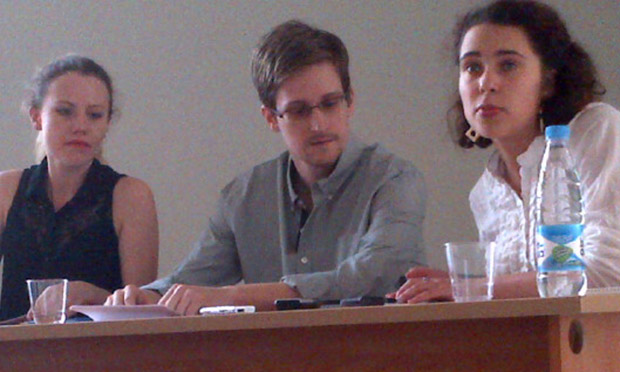
NSA leaker Edward Snowden spoke at Moscow airport during a meeting with human rights groups.
MOSCOW — Edward Snowden, the alleged National Security Agency leaker, said Friday at a meeting with human rights groups that he is asking for temporary asylum in Russia while he attempts to win permanent political asylum in a Latin American country.
Snowden expressed his intentions during a meeting with representatives of 13 human rights groups.
According to Tatyana Lokshina of Human Rights Watch, Snowden seeks to stay in Russia because he "can't fly to Latin America yet," RT.com reports.
Snowden, who fled to Hong Kong after leaking information on NSA's worldwide surveillance and data-gathering networks, has applied for asylum in more than two dozen countries. Bolivia and Venezuelan have offered to accept him.
Lawmaker Vyacheslav Nikonov, chairman of the Russian state Duma also confirmed Snowden's intentions after he and a dozen other prominent officials and activists met with Snowden in the transit zone of Moscow's Sheremetyevo airport, where he has been marooned since June 23.
Also at the meeting were Sergei Nikitin, head of Amnesty International Russia, Vladimir Lukin, Russia's presidential human rights ombudsman, and attorney Genri Reznik.
Snowden said he is ready to ask Russia for political asylum and that he "does not intend to harm the U.S. in the future," according to Nikonov.
"No actions I take or plan are meant to harm the U.S. .. I want the U.S. to succeed," Snowden said, RT.comr reports.
Dmitry Peskov, the spokesman for Putin, told Russian news agencies after the announcement Friday that Russia has not received a new bid for asylum from Snowden and that Putin would continue to insist that Snowden stop leaking information.
Snowden says the government in Western Europe and North American are acting outside the law by preventing him from traveling and called on the rights activists to intervene with Putin on his behalf, Lokshina said.
Snowden in a statement before the meeting thathe had invited the groups "for a brief statement and discussion regarding the next steps forward in my situation."
The emailed invitation from edsnowden@lavabit.com also states: "I have been extremely fortunate to enjoy and accept many offers of support and asylum from brave countries around the world. These nations have my gratitude, and I hope to travel to each of them to extend my personal thanks to their people and leaders."
In the Invitation Snowden claims that the U.S. government is trying to "deny my right to seek and enjoy this asylum under Article 14 of the Universal Declaration of Human Rights. The scale of threatening behavior is without precedent."
Moscow's Sheremetyevo airport, where National Security Agency leaker Edward Snowden is said to be staying in the airport's transit zone.(Photo: Sergei Grits, AP)
Dmitry Peskov, a spokesman for Russian President Vladimir Putin, said that the Kremlin has not been invited to the meeting.
Snowden arrived in Russia on June 23 but has not been seen in public despite being believed to be in the airport's transit zone while bidding for asylum. Friday's developments therefore offer an opportunity to confirm that Snowden is still in Russia.
Snowden is thought to be seeking refuge in a Latin American country, with Venezuela the current front-runner even though President Nicolas Maduro has said that no formal application has been made.
The American Civil LIberties Union, meanwhile, issued a statement Thursday asserting that the former defense contractor "has serious claims for asylum and has a legitimate right to seek asylum irrespective of the human rights record of the country that he ultimately ends up in."
The statement charges that the USA has interfered with Snowden's right to seek asylum by revoking his passport and appears to have prevented him from receiving fair and impartial consideration of his application in many of the countries to which he has applied.
Jamil Dakwar, director of the ACLU human rights program, and Chandra Bhatnaqar, senior attorney for the progam, also warn that by infringing on Snowden's right to asylum, "U.S. actions also create the risk of providing cover for other countries to crack down on whistleblowers and deny asylum to individuals who have exposed illegal activity or human rights violations.
"That's a very dangerous precedent to set," the statement says.
Follow the Guardian's live blog of Snowden's meeting with human rights groups